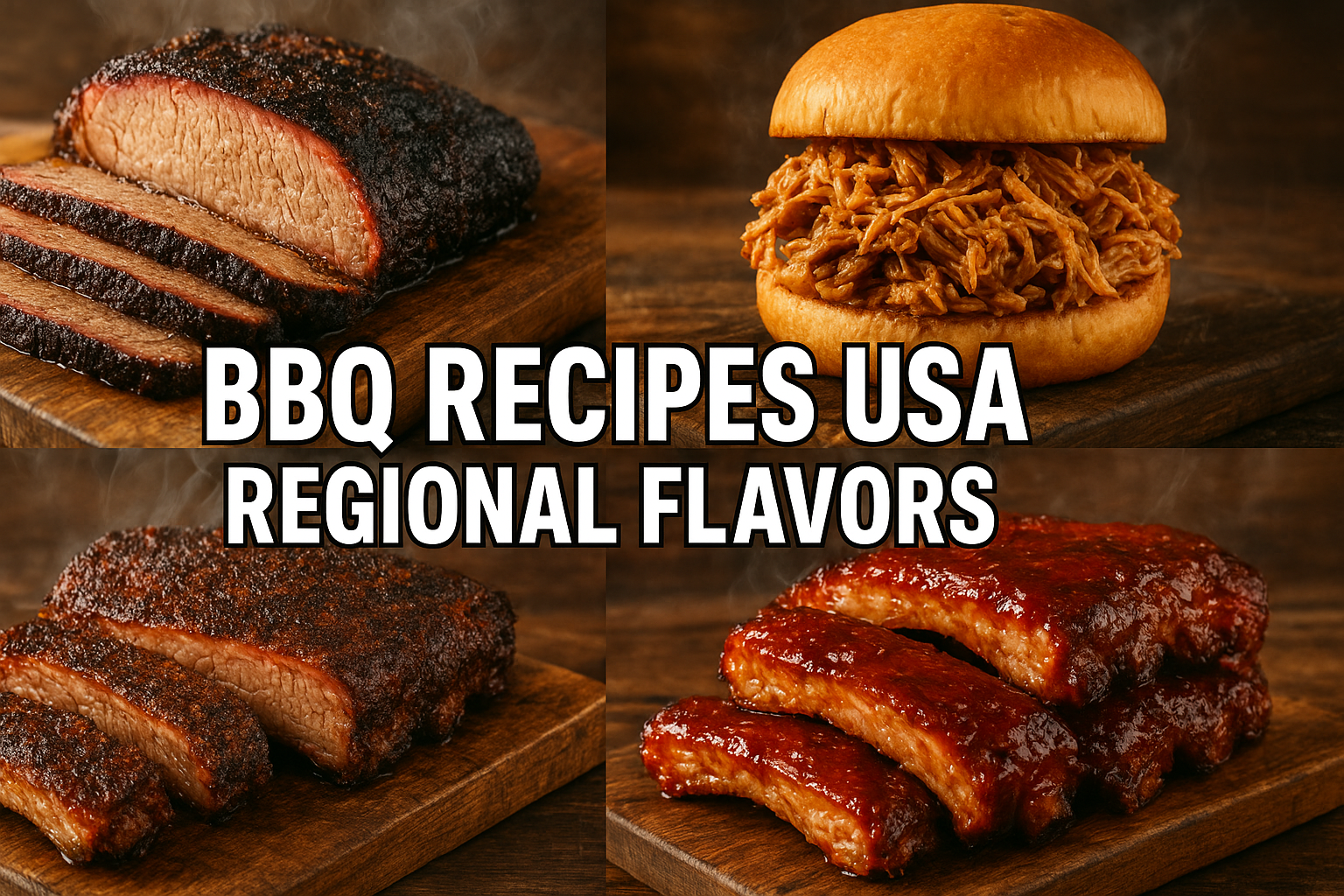
BBQ Recipes USA: Regional Flavors Every Grill Master Needs
Imagine the scene: a Saturday afternoon, and there I am, grilling away with smoke going up into the sky. My neighbor asks me over the fence what I’m cooking. When I say I’m doing Texas-style brisket after a long time of making Carolina pulled pork, he is thrilled. It was then that I thought—American BBQ is not only one thing. It is a whole nation of flavors, techniques, and traditions that will forever change your outdoor cooking.
USA BBQ recipes contain four main regional styles which define the American barbecue: Kansas City, Texas, Carolina, and Memphis. Each region offers a variety of meats, sauces, and smoking techniques that together produce quite different flavors. It does not matter if you are smoking ribs with low temperature and long time method or grilling chicken with tangy vinegar sauce, knowing these regional differences will make your backyard cookouts extraordinary.
What Makes American BBQ Different From Regular Grilling?
A misconception that many people share is that BBQ and grilling are identical. The experience cost me three racks of ribs that I cooked too fast and ended up ruining the meal.
The true BBQ means slow-cooking meat over indirect heat with wood smoke for hours, depending on the cut we’re talking about. We’re talking about 225-275°F for from 4 to 16 hours. Grilling applies direct high heat for fast cooking. When it comes to the authentic BBQ recipes USA styles, patience is the secret ingredient, not an option.
Each of the four regional giants that define American barbecue brings something unique to your dish. Kansas City offers a wide range of meats from beef to lamb and serves them with thick tomato-based sauces. The focus in Texas is mostly on beef, especially brisket, with very light sauce. The Carolinas have a division between the east (vinegar-based) and the west (tomato-vinegar mix) camps, both of which heavily rely on pork. Memphis showcases rib varieties by doing both wet and dry styles, usually topped with a sweet molasses glaze.
Texas-Style Brisket: The King of Beef BBQ
My first attempt at Texas brisket took 14 hours and nearly ended in disaster when I forgot to refill my wood chips at 2 AM. But that crispy bark with the pink smoke ring underneath? Worth every sleepless minute.
Texas brisket starts with a simple rub—coarse black pepper and salt, that’s it. The magic happens during the smoke. You’ll need oak or mesquite wood for authentic flavor. Here’s what I’ve learned after making this dozens of times:
The Basic Process:
- Choose a 10-12 pound whole packer brisket
- Trim fat cap to about 1/4 inch
- Apply rub generously on all sides
- Smoke at 250°F for roughly 1 hour per pound
- Wrap in butcher paper when internal temp hits 165°F
- Cook until probe-tender (around 203°F internally)
East Texas folks slather their brisket in sauce while cooking. Central Texas traditionalists serve it dry with sauce on the side. Both camps agree on one thing—the meat should pull apart with just a fork’s gentle pressure.
Carolina Pulled Pork: Vinegar Tang That Changes Everything
For a long time, my palate has been used to thick and sweet BBQ sauce and the very first bite of Carolina pulled pork tasted very strange to me. I was asking myself where all the sugar was. After that the strong, peppery vinegar came and I got the taste people’s just driving for hours to get this stuff.
The East part of Carolina prefers the whole hog along with the thin vinegar-pepper sauce while West Carolina (also known as the Lexington style) goes with pork shoulder and a sauce containing some tomato. I love the shoulder method because it makes it easier for the home cooks.
My Go-To Carolina Pulled Pork Method:
- Use a 6-8 pound pork shoulder (also called pork butt)
- Simple dry rub with paprika, brown sugar, salt, pepper, garlic powder
- Smoke at 225°F for about 1.5 hours per pound
- No need to wrap—let that bark develop
- Pull when internal temp reaches 195-205°F
- Shred with two forks or gloved hands
- Mix in thin vinegar sauce while meat’s still hot
The sauce is ridiculously simple but transforms everything. Mix apple cider vinegar with red pepper flakes, a touch of brown sugar, salt, and black pepper. Some folks add a splash of hot sauce. Heat it up, pour it over the pulled pork, and watch it soak into every strand.
Kansas City Ribs: Sweet, Sticky, and Competition-Worthy
Kansas City style has shown me that more isn’t always better—except layers of flavor. The ribs are first rubbed, then smoked, and finally coated with the renowned thick, sweet sauce.
For this cooking process, I prefer St. Louis-style ribs (trimmed spare ribs) over baby backs since they have more even cooking. The KC method incorporates a spice rub made of paprika, brown sugar, garlic, onion, and cayenne. After 4-5 hours of smoking, the thick tomato sauce with molasses and brown sugar is brushed on.
What is it that makes Kansas City unique? They welcome the assortment. There are even burnt ends (hardy brisket points), smoked turkey, and BBQ bologna among the offerings. The sauce is still thick and shiny, and it sticks to the meat rather than dripping off.
Memphis-Style Ribs: The Dry Rub Revolution
Memphis was the one who unveiled to me the fact that wonderful barbecue does not require sauce at all. The dry rubs used there are so full of flavor that the application of sauce would merely cover the intricacy of the whole dish.
Memphis dry rub consists of paprika, brown sugar, garlic powder, onion powder, black pepper, cayenne, cumin, and dry mustard. You apply this mixture on pork ribs and let it sit overnight. After 4-6 hours of smoking over hickory, the rub turns into a dark crust that is sweet, spicy, and incredibly addictive.
Some Memphis places do present “wet” ribs as well, which have been brushed with sauce during the last 30 minutes of cooking. But you should first taste the dry—you will experience the pork and smoke in a manner that is otherwise, thick sauce hides.
Common Mistakes That’ll Ruin Your BBQ
I’ve made every mistake possible, so you don’t have to:
Opening the smoker constantly. Every time you peek, you add 15-30 minutes to cook time. I learned to trust my thermometer instead of checking every 20 minutes.
Using too much wood. More smoke doesn’t equal better flavor. It creates bitter, acrid meat that tastes like a campfire. Two to three chunks of hardwood for a whole cook is plenty.
Not letting meat rest. After 12 hours of smoking brisket, I know the urge to slice immediately. But resting for 30-60 minutes wrapped in a towel lets juices redistribute. Your patience gets rewarded with moister meat.
Starting with cheap meat. I tried saving money with Select grade brisket once. Never again. Choice or Prime grades have the marbling that keeps meat tender during long cooks.
Regional BBQ Sauce Guide
Sauce makes or breaks your BBQ recipes USA experience. Here’s what defines each region:
Kansas City: Thick, tomato-based with molasses, brown sugar, and spices. Sweet with a kick.
Texas: Thin if used at all. Some add beef broth, chili powder, and cumin for dipping.
Eastern Carolina: Straight vinegar with red pepper flakes and salt. That’s it.
Western Carolina: Vinegar base with ketchup added for body and slight sweetness.
Memphis: Many skip sauce entirely, but those who use it prefer thin tomato-vinegar blends.
I keep three homemade sauces in my fridge—Kansas City for when guests want “normal” BBQ, Carolina vinegar for pork shoulder, and a thin Texas mop for brisket.
Essential Equipment You Actually Need
Making great BBQ recipes of USA styles doesn’t require a $3,000 smoker. My journey began with a simple Weber kettle and indirect heat. These are the essentials you need:
A dependable meat thermometer (instant-read and leave-in probe). The guessing of temperatures destroys more BBQ than anything else. Wood chunks or chips in hickory, oak, mesquite, apple, or cherry. Every wood produces different flavor profiles. A chimney starter for charcoal. Lighter fluid gives a chemical taste to your smoke. Heavy-duty aluminum foil and butcher paper for wrapping during long cooks.
An offset smoker is my present setup, but I still use my original kettle for small cooks. Equipment matters less than knowing how to control heat and being patient.
Tips From Competition Pitmasters
After talking with folks who’ve won BBQ competitions across the country, I picked up tricks that actually work:
The Texas Crutch wraps brisket or pork in foil with liquid (beer, apple juice, or broth) when it hits the “stall” around 160-170°F. This powers through the temperature plateau that can last hours.
Spritzing keeps meat moist during long smokes. Mix apple juice with apple cider vinegar in a spray bottle and mist the meat every hour after the first three hours.
Banking your coals on one side creates better airflow in offset smokers. Hot side stays around 250-275°F while the meat sits on the cooler side.
Letting meat come to room temp before smoking helps it cook more evenly. I pull everything from the fridge 45-60 minutes before it hits the smoker.
Making BBQ Work for Weeknight Dinners
Not every BBQ recipes USA meal requires 14 hours. I make quick versions when I’m craving that smoky flavor without the weekend commitment.
Weeknight Pulled Pork: Use a 3-pound pork shoulder. Smoke for 6 hours on a Saturday. Shred it, portion it, and freeze. Reheat with vinegar sauce for quick sandwiches all month.
Fast Ribs: Par-cook ribs wrapped in foil with liquid at 275°F for 2 hours. Unwrap, add rub or sauce, and finish over direct heat for 30 minutes. Not traditional, but done in under 3 hours.
Indoor Oven Method: Season meat with dry rub, bake low and slow at 250°F, then finish under the broiler. Add liquid smoke to your sauce for that BBQ flavor. It won’t fool a pitmaster, but it satisfies the craving on a Tuesday.
Why Regional BBQ Styles Matter
The recipes presented here are not merely diverse—they are, rather, food customs that have been passed from one generation to the next. Texas brisket is a product of German as well as Czech butchers’ migrations into the area. Carolina vinegar sauce goes back to the times of English colonists. Memphis dry rubs were developed from the Southern spice mixes. Kansas City’s melting pot embraced influences from all directions.
By making authentic BBQ recipes in the USA’s different ways, I am not only preparing supper. I am, rather, linking with the past and preserving regional food cultures. Each time you opt for vinegar instead of tomato sauce or hickory instead of mesquite, you are paying homage to a tradition that has been perfected by someone over many years.
Your BBQ Journey Starts Now
The long cook times shouldn’t be a cause for concern; the first brisket I cooked was dry and tough. The second Carolina pork was too salty. But, on the fifth attempt, I was serving BBQ that my friends had asked for the recipe.
Begin with one US-style regional BBQ recipe that you like. Perfect it before going on to the next one. Concentrate on temperature control and patience rather than on expensive tools. Believe in the process, and soon you’ll have your own stories about overnight smoking and neighbors wanting to know your secret sauce recipe.
The great thing about American BBQ is that there is no one “correct” way to do it. Texas pitmasters and Carolina grill masters will never stop to argue about whose style is the best. But one thing I have learned from my years of trials and errors—they are all correct. Each regional style has its own characteristic and brings something. It is not your task to choose the one that is the best. It is your task to learn them all and find which flavors are the ones you like the most.
Now, light that smoker. Your travel to authentic BBQ recipes USA is starting and believe me—once you get your first perfect brisket or super soft pulled pork, you will know why people take care of their smokers all weekend.